How to tell an ordinary rough patch from something that needs attention, and the twelve signs worth acting on rather than waiting out.
Most people write off a run of bad nights, persistent low mood, or going quiet on friends as "just a rough patch." And honestly, sometimes that is exactly what it is. Life gets heavy, and the human mind is remarkably good at rallying. But rough patches do not always resolve on their own, and knowing the difference matters. These mental health red flags are the signals worth learning to recognise, because the gap between "struggling a bit" and "needing proper support" is often smaller than people expect.
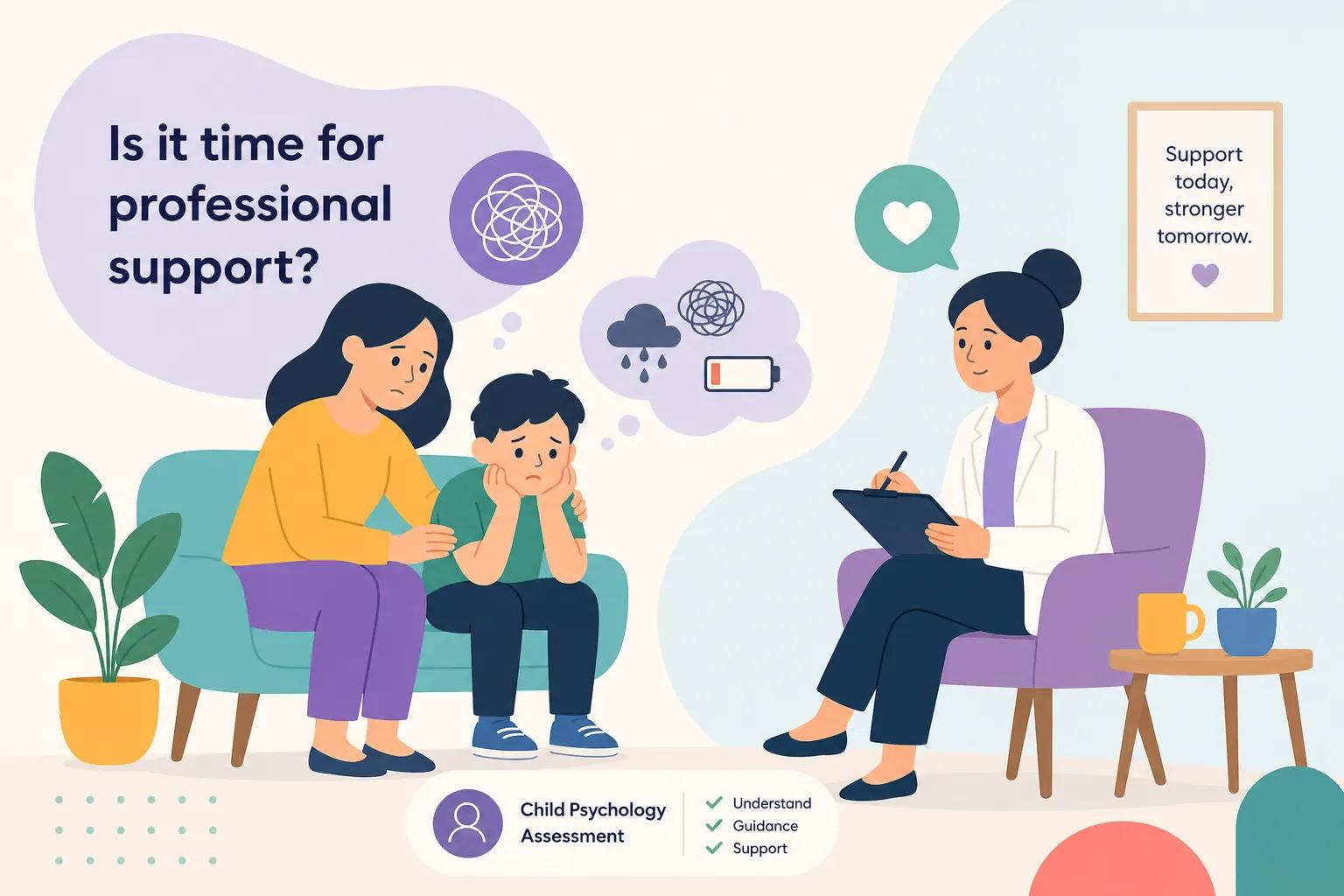
Noticing warning signs in yourself or someone you love can feel genuinely confusing. You do not want to catastrophise, but you also do not want to miss something that matters. That tension is exactly why people often arrive at Inkind Psychology Clinic not in crisis, but uncertain: not sure if what they are experiencing "counts." It does. Uncertainty is a completely valid reason to seek a first conversation with a qualified professional.
Below, you will find twelve of the most important mental health red flags to know, grouped by type: the everyday signs that creep in quietly, the cognitive and behavioural shifts that show up at work or in relationships, the high-risk signals that need urgent attention, and practical guidance on what to actually do when you spot them.
Everyday mental health red flags that are easy to brush off
These are the signs most commonly dismissed as ordinary stress, and they are easy to miss precisely because they arrive gradually. One week of poor sleep is unremarkable. Six weeks of it, combined with dreading things you used to enjoy, is a different conversation entirely.
1. Persistent low mood that lingers beyond a bad week
The NHS advises seeing a GP if low mood has lasted more than two weeks. That is a useful benchmark, but the quality of the mood matters too. Disproportionate irritability, anxiety that does not ease once the stressor has passed, and emotional numbness or detachment are all worth noting, even if the person would not describe themselves as "depressed." Ordinary sadness has a cause you can usually point to; signs of mental distress that do not lift, and do not connect clearly to circumstances, are telling you something.
2. Social withdrawal and loss of interest in everyday life
Pulling away from friends, going quiet with family, skipping things you used to look forward to: these are among the most recognisable behavioural red flags, and also among the most frequently explained away. The tricky thing is that this sign is often more visible to the people around someone than to the person themselves. If someone in your life has gone flat in a way that feels different from their usual self, that observation is worth trusting.
3. Physical signals your body sends when your mind is struggling
Disrupted sleep (too much or too little), significant changes in appetite or weight, and persistent unexplained headaches or stomach aches are the body's way of flagging that something is off. These are not signs of weakness, and they are not separate from mental health. They are part of it. When physical symptoms appear without a clear medical cause and sit alongside mood or behaviour changes, the picture starts to become clearer.
Cognitive and behavioural mental health red flags
These tend to show up at work, at school, or in close relationships before the person themselves has connected them to their mental health. They are easy to attribute to tiredness, distraction, or a bad few weeks. Sometimes that attribution is right. Other times, it is not.
4. Difficulty concentrating, making decisions, or remembering things
Brain fog, forgetting familiar information, being unable to follow through on tasks that would normally feel simple: these are early signs of mental health decline that get mistaken for burnout or ordinary distraction all the time. Slowed thinking and difficulty making decisions are particularly common in depression and anxiety, yet rarely feature in most people's mental health checklist. If someone's cognitive sharpness has noticeably changed, it is worth paying attention to what else might have shifted alongside it.
5. Increased avoidance, risk-taking, or reliance on substances
Escalating alcohol use, avoiding places or responsibilities that used to feel normal, and impulsive or reckless behaviour are not character flaws. They are, more often than not, coping mechanisms. Recognising them as behavioural red flags rather than personal failings is the first step toward addressing the underlying cause. According to NHS England, around one in four UK adults will experience a mental health problem in any given year, and for many, these behavioural shifts are the first visible signal.
6. Emotional numbness or a sense of detachment from your own life
This one rarely gets talked about, but it shows up frequently. A sense of going through the motions, feeling disconnected from people or situations that should feel meaningful, or watching your own life from a slight distance: this kind of emotional numbness is a genuine warning sign of distress, even when it does not look like suffering from the outside.
High-risk mental health red flags that need urgent attention
This section shifts slightly in tone, because it needs to. Suicidal thoughts and self-harm are not easy topics, but skirting around them does not help anyone. Use calm, plain language when raising them. These are medical warning signals, not shameful secrets.
7, 10. Suicide warning signs and other crisis signals
The following four warning signs sit at the more urgent end of the spectrum and should prompt immediate action:
- Expressing hopelessness or feeling like a burden to others, particularly if this is a change from their usual way of speaking.
- Giving away possessions, or saying goodbye in a way that feels final or out of context.
- Withdrawing suddenly after a visible period of distress, or talking about not wanting to be here.
- Researching methods of suicide or making a specific plan. There is a meaningful distinction between passive thoughts ("I wish I weren't here") and active planning. Both matter. Active planning requires immediate action.
Self-harm, even when presented as something minor, deserves a proper response. If wounds are severe, there has been an overdose, or someone is in immediate danger, do not wait.
Immediate UK crisis contacts
- 999 or A&E: for immediate danger or medical emergency.
- NHS 111(select the mental health option): urgent but non-emergency support.
- Samaritans: 116 123 (free, 24/7, confidential).
- Shout crisis text line: text SHOUT to 85258 (free, 24/7).
- CALM: 0800 58 58 58 for those affected by suicidal thoughts.
- Childline: 0800 1111 for under-19s.
When does a rough patch cross into clinical territory?
A framework widely used in clinical assessments uses four markers to help determine whether a concern has moved into territory requiring professional support. The four markers are: Disproportionate, Disruptive, Distressing, and Duration. You do not need all four. Any one of them, sustained over time, is a sufficient reason to reach out.
Disproportionate means the response is bigger than the situation warrants. Disruptive means it is getting in the way of daily life, work, school, or relationships. Distressing means it is causing the person genuine suffering. Duration means it has persisted rather than resolving naturally.
A useful personal benchmark for low mood is the NHS's two-week marker. For anxiety, the question is not time but whether it is controllable and whether it is shrinking your life. These mental health red flags present differently in younger people, too. In children, watch for tantrums, aggression, nightmares, regression, or reluctance to go to school. In teenagers, look for academic decline, secrecy, sudden friendship changes, or a withdrawal from social media that feels abrupt rather than intentional. These differ enough from adult presentations that a specialist assessment, rather than a general one, makes a real difference.
How to start a conversation with someone you're worried about
Starting this kind of conversation does not require you to have the perfect script. It requires showing up honestly, and doing it from a place of care rather than alarm. The goal is not to diagnose someone. It is to let them know you have noticed, and that you are not going anywhere.
What to say, and what to avoid
Lead with a specific observation, not a label: "I've noticed you've seemed quieter lately, and I wanted to check in" lands very differently from "I think you might be depressed." Ask permission before going deeper: "Is now an okay time to talk about it?" Validate before you try to fix: "That sounds genuinely exhausting" is more useful than immediately suggesting solutions.
Avoid phrases that shut things down, such as "you'll be fine," "others have it worse," or "just try to think positively." They come from kindness, but they communicate that the person's experience is not quite worth taking seriously.
How to follow up if they're not ready yet
Not everyone will open up the first time you ask. That is fine. Stay present without pushing. Check in the next day. Offer something concrete rather than generic, such as "Would it help if I came with you to the GP?" rather than "Let me know if there's anything I can do." Simply showing up consistently, without pressure, is more powerful than having the right words. Evidence consistently suggests that people are more likely to seek help when encouraged by someone they trust, that steady presence genuinely matters.
When to seek mental health help: what to do next
If you have got to this point in the article, you are already paying attention in the right way. The next step is not as daunting as it might feel. A professional assessment is not a verdict. It is clarity. Knowing what is going on, or ruling out what is not, is more useful than weeks of wondering whether what you are experiencing "counts."
Figures from mental health charities suggest that, on average, people wait around 49 days from first noticing symptoms before seeking help. Some wait far longer. That gap is almost always made up of the same quiet hesitation: "Maybe I'm overreacting. Maybe it'll pass." Sometimes it does. Often, it does not need to take that long.
Inkind Psychology Clinic is a UK-based private psychology clinic staffed by qualified, experienced psychologists. The clinic offers individual therapy for adults and young people, couples therapy, and ADHD assessments. Sessions are available online and in person, which removes many of the practical barriers that can delay people from reaching out: no lengthy commute, flexible appointment times, and no lengthy NHS waiting list to navigate. Inkind works with a range of major UK health insurers, and as a social enterprise, also offers limited free therapy for those who find access to support difficult. Whether you have a clear concern or simply a feeling that something is not quite right, an initial consultation is a genuinely low-pressure starting point.
The fact that you're asking is already something
Spotting mental health red flags takes a particular kind of attention: the willingness to notice something uncomfortable and not immediately explain it away. Whether you are reading this about yourself or someone you love, that attention matters.
Acting on what you have noticed is not an overreaction. It is the most sensible, grounded thing you can do. A conversation with a qualified professional can provide real clarity on what is happening and open up the right pathways, and that can make a meaningful difference to what comes next. The fact that you are here, looking for the right information, already tells you something important about the kind of attention you are paying.
If any of the warning signs in this article feel familiar, reach out to Inkind Psychology Clinic and book an initial consultation. You do not need to have it all figured out before you get in touch. That is what the conversation is for.