Evidence-backed ways to bring anxiety down: breathing and grounding for the moment, CBT skills for the thoughts, and daily habits that lower your baseline.
Your heart is hammering. Your chest feels tight. Your mind has latched onto a thought and it will not let go, no matter how hard you try to reason with it. If that sounds familiar, you are not broken, coping with anxiety is not a matter of willpower. Anxiety is the body's threat-detection system doing exactly what it was designed to do, just in situations that do not actually require it. The good news is that there are practical, evidence-backed techniques you can use today to turn the dial down. The strategies in this article are rooted in what works in clinical practice, covering everything from breathing and grounding exercises to CBT-based skills and daily habits that lower your baseline.
The aim here is not an exhaustive list to tick through, but to help you understand why certain approaches work so you can choose the right tool for the right moment. Coping with anxiety becomes considerably more manageable once you understand the mechanics behind it.
Why anxiety is so physically exhausting
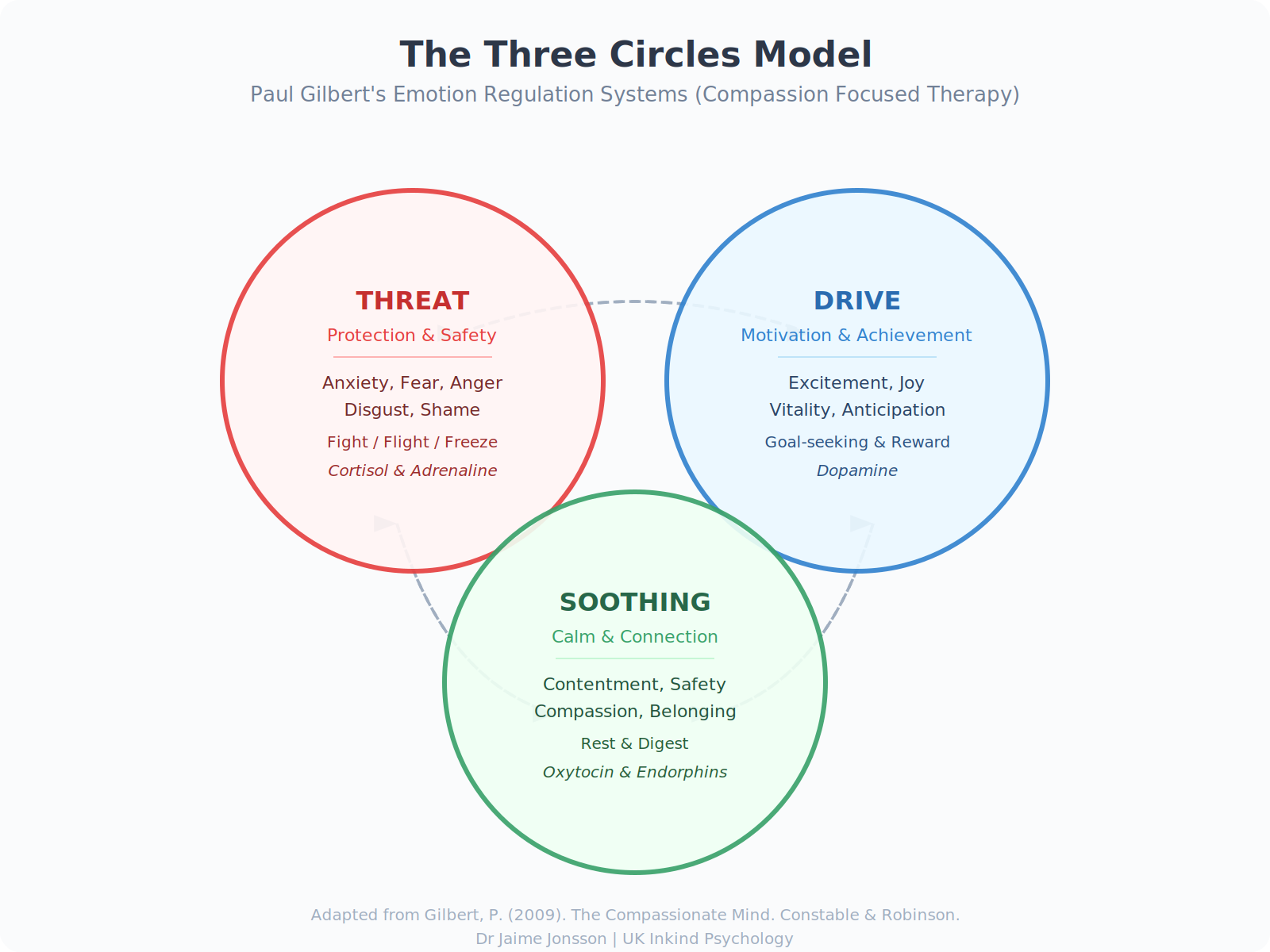
When your brain perceives a threat, whether that is a genuine danger or a looming work deadline, it floods your body with adrenaline. Your heart rate increases and your breathing becomes shallow. Your muscles tense, and digestion slows. This is the fight-or-flight response, and it is brilliant when you genuinely need to run from something. The problem is that the brain does not reliably distinguish between a lion and a difficult conversation, so it fires the same alarm either way.
The exhaustion that follows an anxiety spike makes complete sense once you understand this. Your body has spent significant physiological energy, through adrenaline-driven sympathetic arousal and the metabolic effort of sustained muscle tension, preparing for a threat that never arrived. This is also why telling yourself to "just calm down" rarely works: the system is biological, not logical. Effective anxiety management works on both the body and the mind. Some techniques target the physical response first; others target the thought patterns that keep the cycle running. Understanding this helps you stop reaching for the same strategy every time and start matching the tool to what is actually happening.
Coping with anxiety: breathing exercises that calm the response
Controlled breathing is not a wellness trend. It is one of the fastest, most evidence-supported ways to reduce physiological arousal, and the NHS recommends it as a core anxiety self-help technique. The reason it works is straightforward: a slow, extended exhale activates the parasympathetic nervous system, which signals to the brain that the threat has passed.
How to practise box breathing
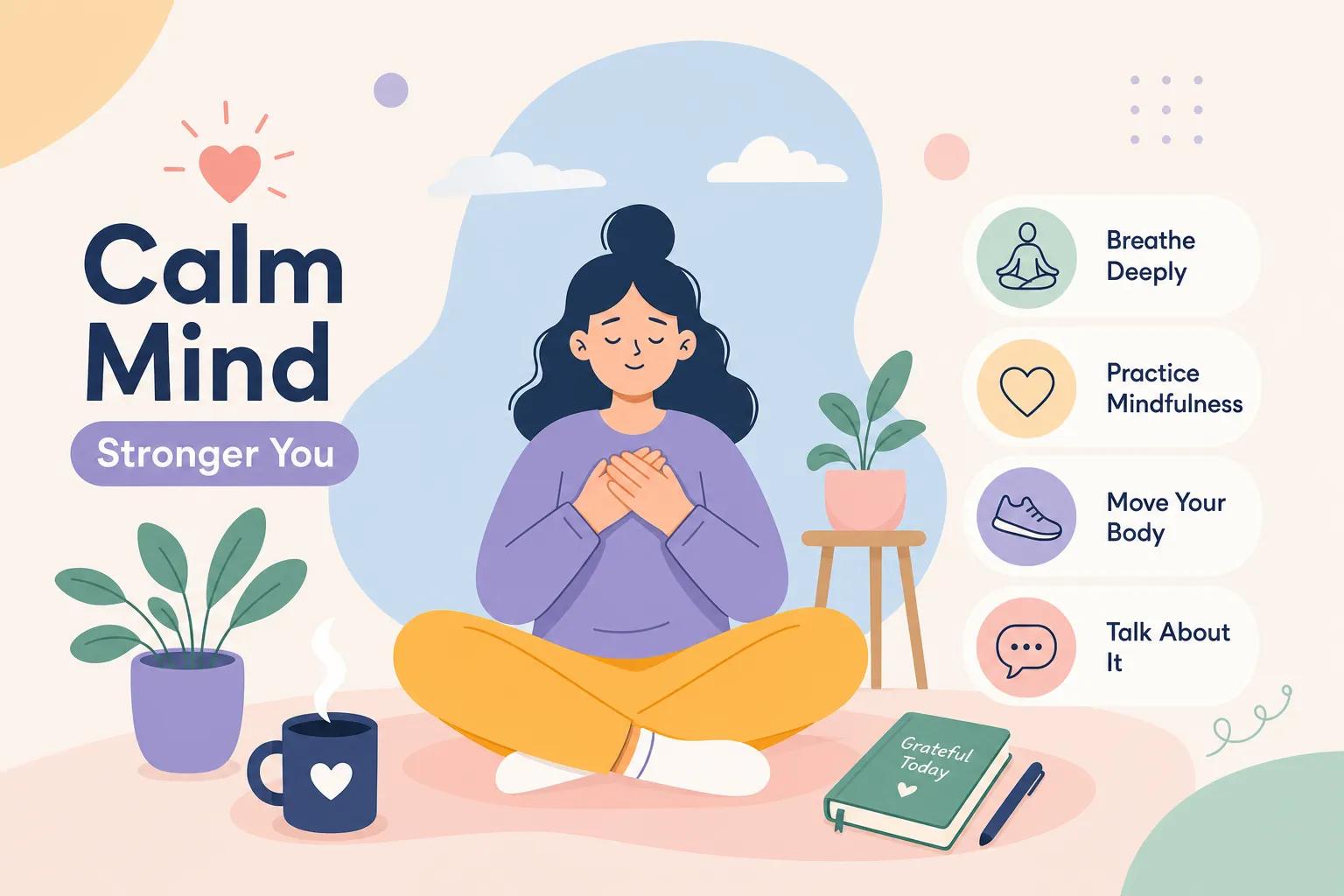
Box breathing is a reliable first tool. Inhale through your nose for four counts, hold for four, exhale for four, hold again for four. Repeat four to six cycles, which takes roughly five minutes. You can do this at your desk, in a waiting room, or in the car before a stressful meeting. It requires nothing except a quiet moment to focus.
When to use the physiological sigh
If anxiety spikes suddenly, the physiological sigh works faster. Take a full inhale through your nose, then add a second short sniff at the very top, and exhale slowly and fully through your mouth. One to three repetitions is enough. This technique rapidly deflates the air sacs in the lungs, which is one of the quickest ways to reduce acute physiological arousal.
Building diaphragmatic breathing into your routine
For day-to-day tension rather than acute panic, diaphragmatic breathing is the more sustainable practice. Place one hand on your chest and one on your stomach. Breathe in so your stomach rises more than your chest, then exhale slowly through your mouth. Build this into your existing routine (a few minutes in the morning or before sleep) rather than waiting until anxiety is already high. Regular practice tends to reduce the frequency and intensity of spikes over time, intervening before the system is activated is always easier than trying to calm it once it is in full swing.
Grounding exercises for anxiety: interrupting the spiral
Grounding works by redirecting attention away from an anxious thought loop and back into the present environment. The 5-4-3-2-1 method is one of the most widely used: name five things you can see, four you can feel, three you can hear, two you can smell, and one you can taste. Work through it slowly, and pair it with steady breathing for the best effect. Some people find that speaking the answers aloud or writing them down helps more than working through them purely in their head.
Grounding techniques are used in clinical settings for anxiety disorders and panic disorder, and in some trauma-related settings as well. Complementary approaches include holding something cold or textured, pressing your feet firmly into the floor, or focusing intently on a single object and describing it in detail. Grounding is particularly useful when anxiety brings a sense of unreality or disconnection. It gives the mind something concrete to hold onto when abstract worry has taken over. Far from being peripheral add-ons, these are established calming techniques for panic that feature in evidence-based treatment programmes.
Coping with anxiety: daily habits that keep it manageable
Breathing and grounding techniques handle anxiety in the moment. But what you do every day determines the baseline from which those spikes happen. The lifestyle factors with the strongest research support are movement, sleep, and what you put into your body.
Regular exercise measurably reduces anxiety symptoms. A 2026 meta-analysis of exercise interventions found consistent benefits for programmes involving at least four sessions per week of 21 to 40 minutes, sustained over eight weeks or more. A 30-minute walk four times a week is a realistic, evidence-aligned target. The key is regularity over intensity: moderate, consistent movement outperforms occasional intense sessions.
Sleep deprivation amplifies the brain's threat response, which means poor sleep and anxiety form a reinforcing cycle. Supporting your sleep means keeping consistent wake and sleep times, limiting screen use in the hour before bed, and treating insomnia as something worth addressing directly rather than pushing through. If sleep problems are persistent, that alone is worth raising with a professional.
Caffeine is worth examining honestly. NHS guidance and European food safety research identify around 400mg per day as the threshold above which anxiety risk increases, and caffeine also impairs sleep, which compounds the problem indirectly. Alcohol is more counterintuitive: it may feel calming in the moment, but it disrupts sleep architecture and triggers a physiological rebound that increases anxiety the following day. Neither substance is a moral issue, but both are practical levers. Reducing gradually, rather than stopping suddenly, is the more sustainable approach.
CBT-based strategies to challenge anxious thinking
Cognitive Behavioural Therapy is the most evidence-based psychological treatment for anxiety disorders, and some of its core techniques translate well into daily self-help. The most useful ones focus on containing worry and testing whether anxious thoughts actually hold up.
Worry scheduling is a well-established CBT technique for managing the kind of repetitive worry that runs in the background all day. Set aside a specific 15 to 20 minute window each day as your designated "worry time." When anxious thoughts arise outside that window, acknowledge them briefly and return to your current task. During your scheduled slot, write the worries down and work through them. This approach reduces the time anxiety occupies without requiring you to suppress thoughts, which almost always backfires. NHS Talking Therapies includes versions of this technique in its guided self-help programmes.
Thought challenging is the other core CBT skill worth practising. When an anxious thought arrives, ask yourself whether you are dealing with a fact or an interpretation. What is the realistic likelihood of this actually happening? And what would you say to a close friend who had this thought? This is not about forcing a positive spin on things, it is about testing whether the thought is as solid as it feels. Anxious thoughts are not evidence. Treating them as hypotheses to examine, rather than facts to accept, is one of the most consistently effective shifts you can make.
When self-help reaches its limits
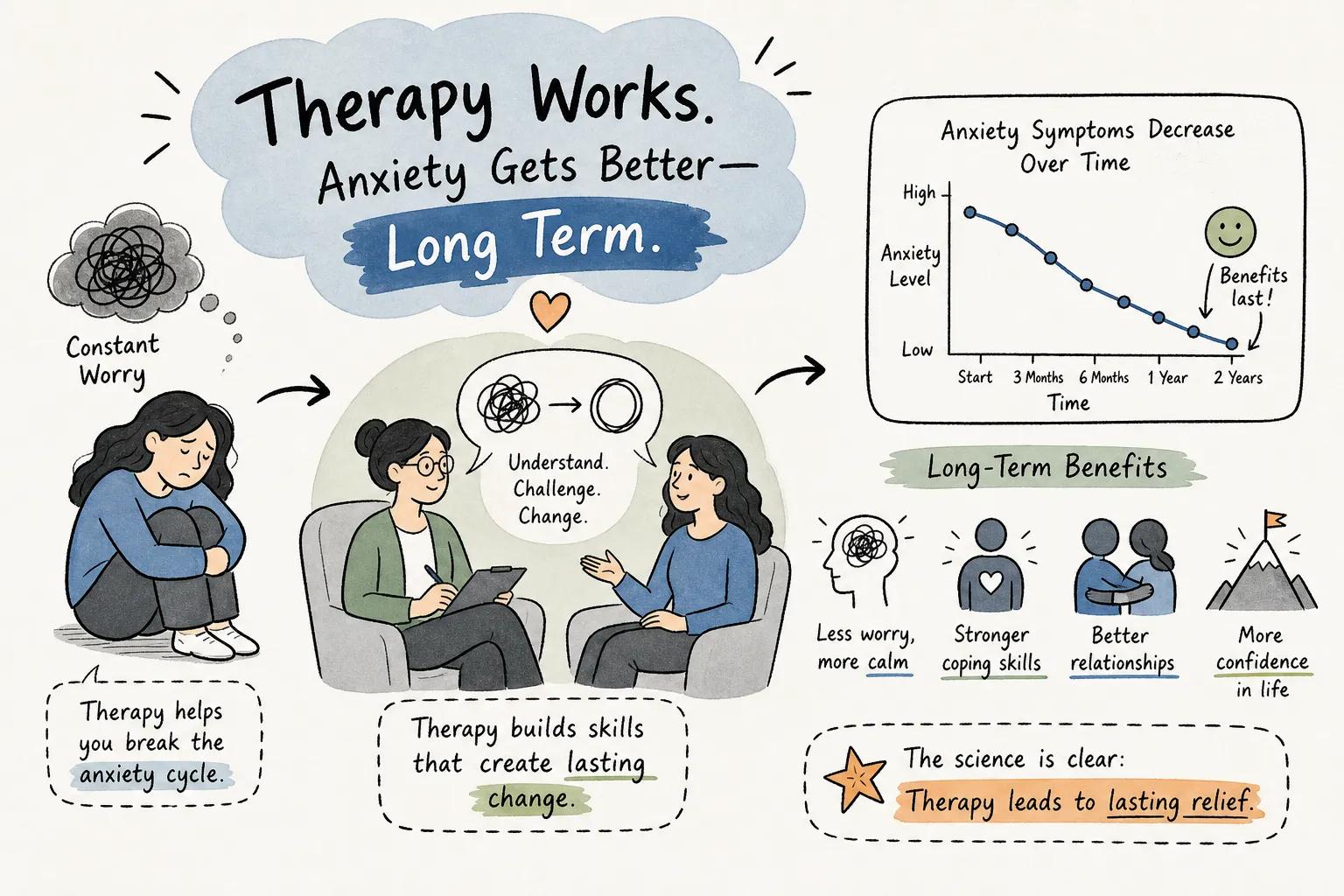
The techniques above are used in clinical practice and have good evidence behind them, breathing and relaxation approaches as symptom-management tools, and CBT strategies including thought challenging and worry scheduling with among the strongest trial support of any psychological intervention for anxiety. But self-help has a ceiling, and recognising that ceiling is itself an important skill. Anxiety that persists beyond the stressor that caused it, avoidance of situations or activities that once felt normal, disrupted sleep or appetite over several weeks, or regular panic attacks are all signs that something more structured is needed.
A qualified psychologist can do something a workbook or article cannot: assess the specific pattern of your anxiety, identify the maintaining factors such as safety behaviours and avoidance, and build a personalised treatment plan. At Inkind Psychology Clinic, our clinicians offer treatment to adults and young people both online and in person across the UK, using advanced therapeutic approaches including CBT. Inkind works with a range of health insurance providers and is also committed to improving access to psychological care for those who face financial barriers to private support, please contact the clinic directly to discuss your options.
Seeking professional help is not a last resort. It is the most direct route to lasting change when anxiety is persistent, severe, or affecting your daily life. The sooner you address what is driving it, the less ground anxiety has to cover.
Start with one technique, not ten
Coping with anxiety is a skill, and skills take practice. The techniques in this article are not theoretical: they are used every day in clinical settings, and they work when applied consistently. The worst thing you can do is try everything at once, feel overwhelmed, and conclude that nothing helps.
Pick one technique that resonates and practise it this week. Box breathing is a solid starting point. Worry scheduling works well if rumination is your dominant pattern. If you have been running on poor sleep and three coffees a day, start there. Small, consistent changes build the most durable results.
If you have been working at this for a few weeks and the anxiety is not shifting, that is useful information rather than a sign of failure. It means the pattern is more complex than self-help alone can address. A conversation with a psychologist at Inkind Psychology Clinic can help identify what is really maintaining the anxiety and build a plan that addresses it at its root. Find out more and book an initial conversation with our team today.