What actually happens in couples counselling in the UK, what the first sessions involve, and when it helps most.
If you are considering couples counselling in the UK, you are not alone, and you are probably not starting from the easiest place. Many couples wait years before seeking help: years of arguments that go nowhere, conversations that end in silence, and a quiet distance that neither partner quite knows how to name. By the time many couples arrive at a therapist's door, they are not looking to grow closer; they are trying to decide whether to stay together at all.
If you have been searching for couples counselling in the UK, you have probably noticed how confusing it all feels. Terms like "marriage counselling," "relationship therapy," and searches such as "couples counselling near me" turn up a wide range of options spanning free NHS services, charity providers, and private clinics with very different levels of training behind them. It is hard to know where to start. This guide cuts through that noise. By the end of it, you will know what couples counselling actually involves, which approaches the research supports, what it costs, and how to find someone genuinely qualified to help, rather than just someone who calls themselves a couples counsellor.
One thing worth saying early: there is a meaningful difference between a general counsellor and a qualified psychologist. Private clinics like Inkind Psychology Clinic, staffed by doctoral-level psychologists rather than diploma-level counsellors, represent a more clinically rigorous option for couples navigating complex difficulties. That distinction matters more than most people realise, and we will come back to it.
What couples counselling in the UK actually covers
The terms "couples counselling," "couples therapy," and "marriage counselling" are used almost interchangeably in UK practice, and you do not need to worry too much about the labels. What matters is the focus: in all three, the relationship itself is the client. The work centres on communication patterns, recurring conflict, trust issues, intimacy, and how two people relate to each other when life gets hard.
Counselling vs therapy: which do you need?
There is a practical distinction worth understanding. Counselling tends to be shorter-term and solution-focused, designed to help couples work through a specific problem or improve a particular skill. Therapy goes deeper, exploring the attachment patterns, emotional dynamics, and historical roots that keep conflict alive long after the original argument has been forgotten. If you are dealing with a contained problem, for example, a communication breakdown following a major life event, shorter-term counselling may be all you need. If the difficulties feel entrenched, repetitive, or connected to deeper personal histories, a more exploratory therapeutic approach is likely to serve you better.
What actually happens in a session
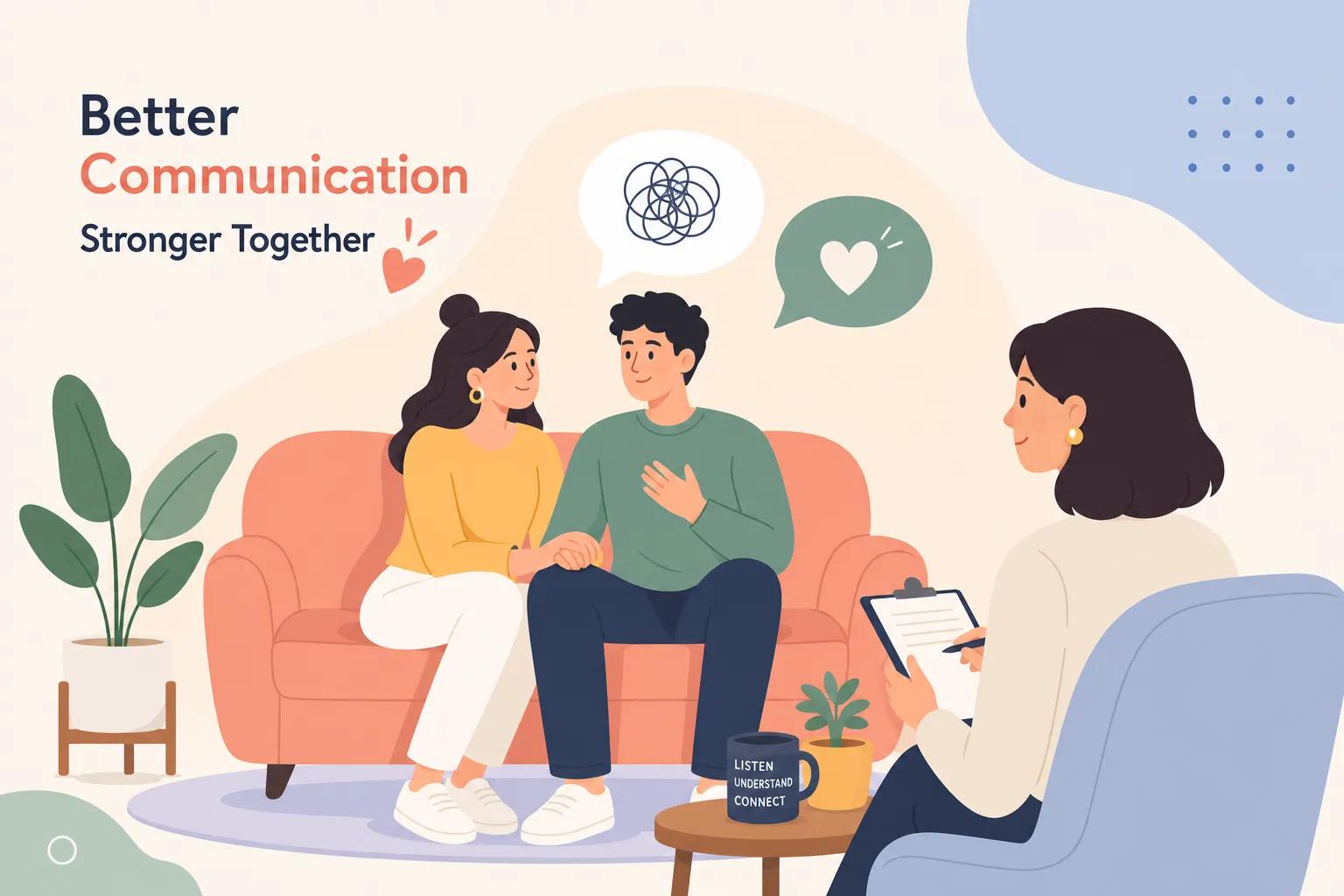
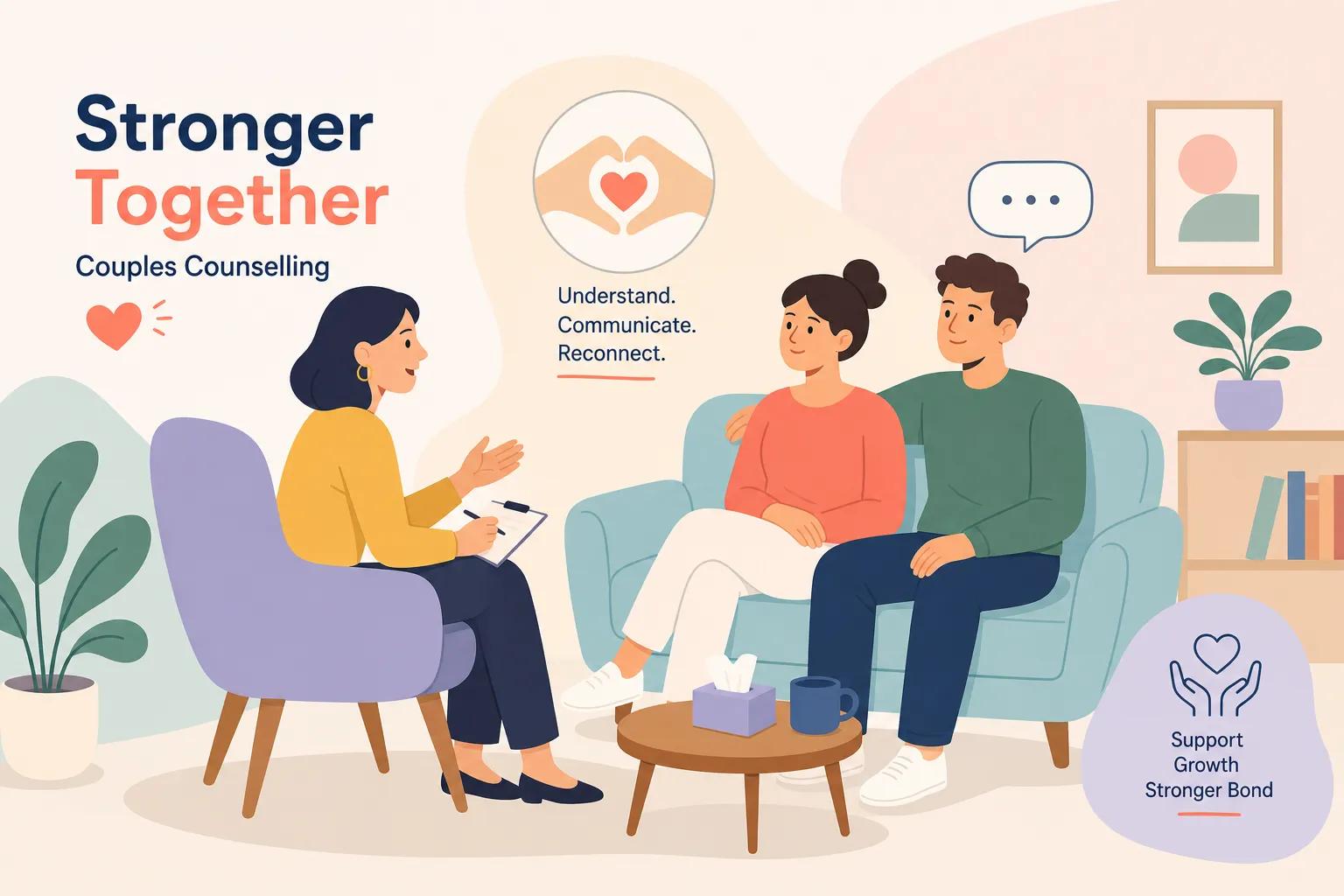
Sessions are commonly around 50 to 60 minutes, with both partners present. The therapist facilitates rather than judges: each person is given space to speak, the conversation is kept focused on the relationship rather than on who is right, and the goal is understanding rather than arbitration. A common fear is that the therapist will take sides. In practice, a well-trained couples therapist works to remain a skilled, neutral presence for both people in the room. Their job is not to deliver a verdict; it is to help you both hear each other in a way you have not managed to do alone.
The main therapy approaches used in couples counselling UK
Not all couples counselling is the same. The approach a therapist uses shapes the entire experience, and knowing the options helps you make a more informed choice when you start looking.
EFT, Gottman, and systemic therapy: a plain-English overview
Emotionally Focused Therapy (EFT) is one of the most well-researched approaches available. It centres on attachment needs, helping partners understand the emotional cycles that pull them apart and guiding them toward a more secure bond. Studies published over the past two decades, including landmark work by Johnson (2004), consistently show that around 70 to 75 per cent of couples in EFT recover from significant relationship distress, with roughly 90 per cent showing meaningful improvement.
The Gottman Method takes a more structured, practical approach, grounded in decades of observational research into what makes relationships work. It focuses on communication, friendship, conflict management, and shared meaning. Systemic couple therapy widens the lens: rather than looking only at the two partners, it considers the family histories, cultural contexts, and external pressures shaping the relationship. Some therapists also draw on CBT-based techniques or integrative models that combine elements across these frameworks.
Matching the approach to your situation
EFT tends to work particularly well for couples experiencing emotional disconnection, the classic pursue-withdraw dynamic, or relationship injuries such as infidelity. Gottman-informed therapy is a strong fit when communication breakdown and conflict patterns are the primary concern and you want a skills-based, practical format. Systemic therapy is especially useful when family-of-origin issues, blended family stress, or major life transitions are driving the difficulty. In practice, a skilled relationship therapist will often integrate elements of multiple approaches rather than following one model rigidly, adapting to what each couple actually needs.
Why your therapist's qualifications matter more than you might think
Here is something the UK counselling landscape does not advertise clearly: the profession is largely unregulated. According to guidance from bodies such as the BACP and the Professional Standards Authority (PSA), there is no single statutory route to calling yourself a counsellor, which means the standards behind any individual practitioner can vary considerably. For something as significant as relationship support, where the stakes include your wellbeing, your partner's wellbeing, and sometimes your children's stability, that matters enormously.
What accreditation actually means for couples
The main professional bodies to look for are BACP (British Association for Counselling and Psychotherapy) and UKCP (UK Council for Psychotherapy), which are among the most widely recognised registers in the UK. COSRT is the specialist body for psychosexual and relationship therapy, and is particularly relevant if intimacy issues are central to what you are dealing with. For psychologists specifically, the key statutory registration is with the HCPC (Health and Care Professions Council), which is the formal regulatory body; BPS (British Psychological Society) membership is a further mark of professional standing. The minimum standard any couple should look for is registration with a PSA-accredited register. Beyond that, ask specifically about the therapist's couples training. A general counselling qualification and a qualification in couples therapy are meaningfully different things, and it is entirely reasonable to ask.
The case for working with a qualified psychologist
A qualified counselling psychologist has completed doctoral-level training and is registered with the HCPC, the statutory body responsible for regulating health professions in the UK. They are held to rigorous clinical and ethical standards throughout their career. For couples navigating complex difficulties, trauma history in one or both partners, mental health conditions running alongside relationship strain, or deeply entrenched patterns that have resisted change for years, this level of clinical expertise makes a genuine difference. At Inkind Psychology Clinic, couples therapy is delivered by qualified psychologists rather than general counsellors. It is also worth checking directly with any clinic whether your health insurance policy covers any aspect of psychological therapy, as policies vary considerably.
Accessing couples counselling UK: costs and waiting times
Private therapy is not the only route. Understanding all your options before deciding which path makes sense for you will save time and help you find the right level of support.
NHS and low-cost options: what is available and how long it takes
NHS Talking Therapies is the main free route in England, with a national median waiting time of around 21 days from referral to first session as of mid-2026, though 95 per cent of patients are seen within 18 weeks. Couples counselling specifically is only available through some local NHS services, so availability varies depending on where you live. Relate is the UK's most established relationship counselling charity, with centres across England and Wales; fees are typically sliding-scale, ranging from around £20 to £90 depending on income. Local Mind centres and community counselling services offer further low-cost options, sometimes as low as £15 to £20 per session, though waiting lists exist across the charitable sector because demand is consistently high.
Private couples counselling: typical fees and what you get
Private sessions in the UK typically range from £60 to £100, with London practitioners often starting closer to £90 and senior specialists sometimes reaching £150 or more. A typical course of couples counselling runs to around 10 sessions on average, though shorter courses of six sessions are common for more focused work. Private therapy frequently offers shorter waits than NHS or charity routes; some providers can start within a week. You also get more flexibility over scheduling and format, and a greater choice of therapist and approach.
How much does relationship counselling cost in the UK? As a rough guide, a full private course of 10 sessions could range from £600 to £1,500 depending on location and the therapist's experience. If you hold a private health insurance policy, it is worth checking whether it covers individual psychological therapy: while standard policies rarely cover joint couples sessions, some cover individual sessions that address relationship-related mental health concerns, which can reduce the overall cost significantly.
Does couples counselling actually work?
It is a completely fair question to ask before committing time, money, and emotional energy. The honest answer is yes, with some important context. The evidence base for well-supported approaches is genuinely encouraging, and going in with realistic expectations helps both partners engage more fully with the process.
Studies published over the past two decades show that around 70 per cent of couples report meaningful improvement after a course of couples therapy. EFT in particular shows the recovery rates noted earlier, 70 to 75 per cent recovering from significant distress, with approximately 90 per cent showing notable improvement in some studies. Couples who attend consistently and complete a full course of sessions show stronger outcomes than those who drop out early. Therapy is not a guarantee, and both partners' willingness to engage matters significantly. But the evidence is clear: for couples who commit to the process, it tends to help.
One more thing worth naming directly: couples who seek support before the relationship has reached crisis point tend to make faster progress. Waiting until things feel desperate is understandable, but it is not necessary. If something feels off, that is reason enough to start.
Taking the first step: what to do this week
The hardest part of couples counselling is rarely the sessions themselves, it is making the decision to book the first appointment. Here are four concrete actions to take now, rather than continuing to research indefinitely.
- Check the BACP or UKCP online directories and look for therapists with specific couples training, not just a general counselling qualification.
- Ask any prospective therapist directly: "What is your couples-specific training, and which models do you use?" A confident, clear answer is a good sign.
- Check your health insurance policy for mental health or psychological therapy benefits, and ask the clinic whether they are recognised by your insurer.
- Decide whether online or in-person sessions suit you better. Many services now offer online appointments, which increases your choice of therapist regardless of where you live; evidence suggests online therapy can be effective for many people.
Couples therapy is not an admission that your relationship is broken. It is a decision to take it seriously. If you are looking for qualified psychological support and the flexibility of both online and in-person sessions across the UK, Inkind Psychology Clinic offers couples counselling delivered by experienced, doctoral-level psychologists. You can find out more and book an initial consultation directly through the clinic's website.
Your relationship is worth the right support
You came to this article with a mixture of hope and uncertainty. Both are reasonable. The hope means you have not given up; the uncertainty means you are being honest about what you need. Couples counselling in the UK covers a wide range of relationship difficulties, draws on well-evidenced approaches, and is available through NHS, charity, and private routes at a range of price points.
Finding a qualified, accredited relationship therapist in the UK is worth the extra effort. The difference between a registered professional with couples-specific training and someone who simply advertises the service is significant, and your relationship deserves the real thing. Stop researching and start. The first conversation is almost always less daunting than the weeks spent deciding to have it.