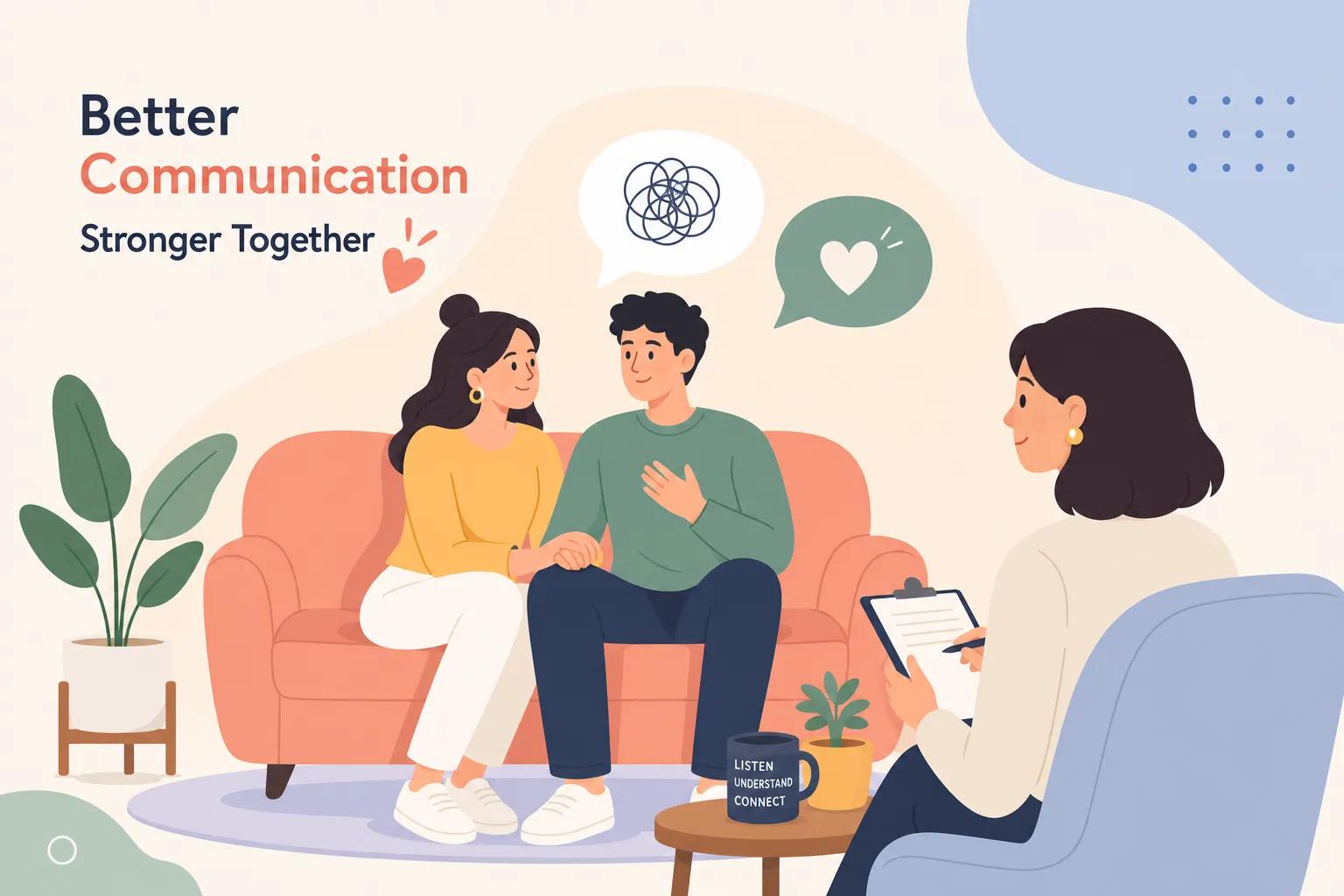
What the evidence says about couples therapy and communication, why "just talk more" rarely fixes anything, and what does shift the pattern.
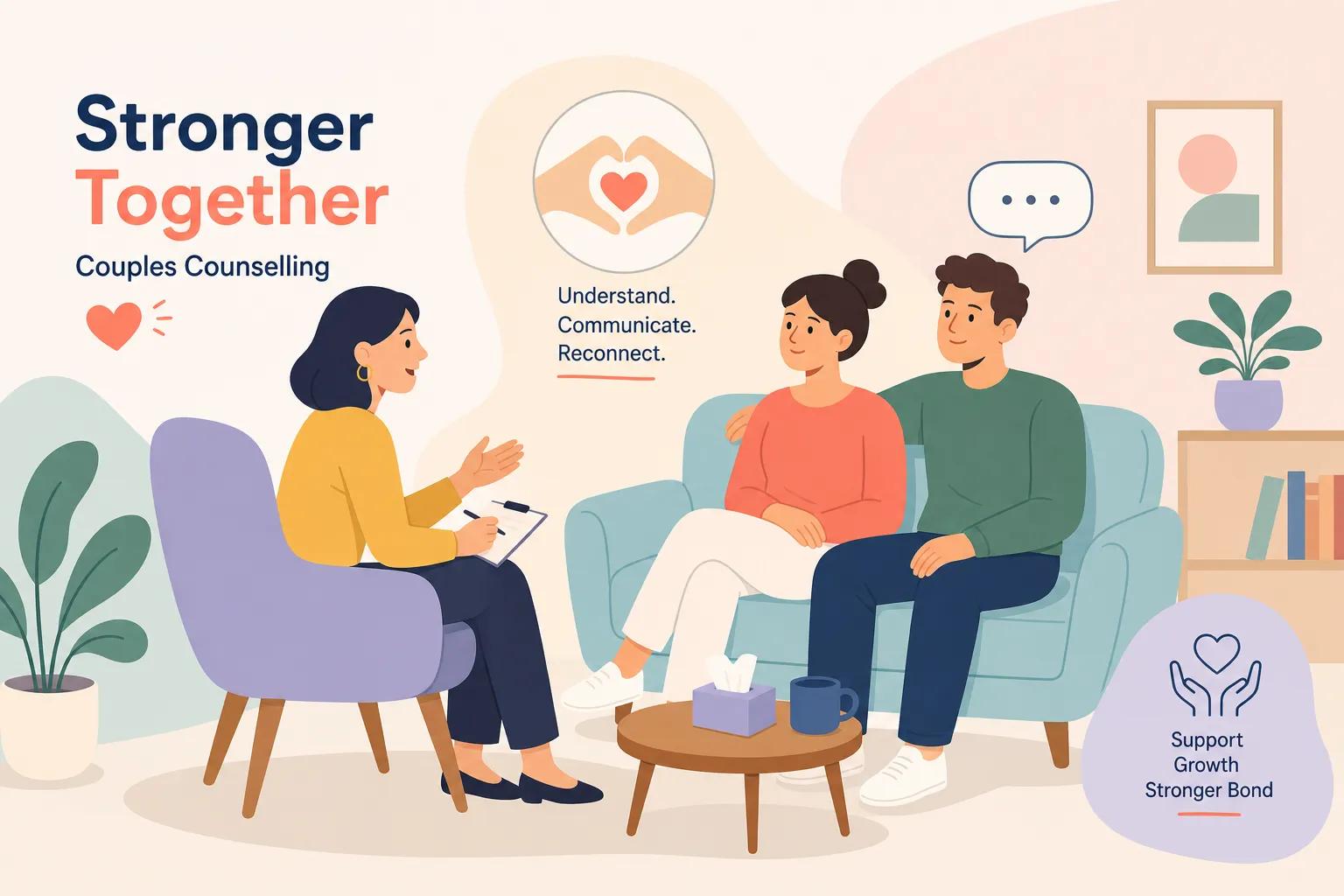
Picture two people sitting across from each other after yet another argument that went exactly nowhere. They've tried talking it out. They've promised to "do better." They've given each other space. Nothing sticks. The quiet question hanging between them is whether couples therapy would actually change anything, or whether it's just more talking that leads to the same place.
So, does couples therapy actually work for communication problems? It's a fair question, and it deserves a straight answer grounded in research rather than reassurance. This article draws on clinical trials, systematic reviews, and the kind of practical knowledge that shapes day-to-day work at clinics like Inkind Psychology Clinic, where qualified psychologists work with couples navigating exactly these dynamics. By the end, you'll know what the evidence genuinely supports, which therapeutic approaches are worth your time and money, how long realistic change takes, and what causes therapy to stall so you can avoid those pitfalls from the start.
Does couples therapy actually work for communication problems? What the research says
The headline figure most people encounter is that around 70 to 75 per cent of couples report overall relationship improvement after therapy. That number is real, but it measures broad relationship quality, not communication specifically. When you narrow the lens to communication outcomes alone, the picture becomes more precise: a 2026 survey of couples who had attended therapy found that 34 per cent self-reported improvement in their communication. That figure sounds modest until you consider what it is capturing: a specific, self-reported change in communication behaviour rather than simply a general feeling that things are better.
Systematic review evidence fills in the gaps that survey data leaves. Two large meta-analyses, covering 97 and 114 outcome studies respectively (Shadish & Baldwin, 2003; Lebow et al., 2012), found a moderate average positive effect on communication and relationship quality, with some effects lasting up to four years. Moderate does not mean weak in research terms. It means reliably meaningful across a wide range of couples, settings, and starting conditions. The effect size holds across different countries, therapy formats, and couple types.
One reason a single "success rate" is hard to pin down is that different studies measure different things. Survey data captures what couples feel. Clinical trials measure observable behaviours: turn-taking, escalation and de-escalation patterns, and listening accuracy. A couple might report feeling closer without having changed the specific communication habits that caused conflict. The distinction matters when you're choosing a therapist, because evidence-based practice means matching the approach to what the couple actually needs to change, not just what they hope to feel differently about.
Which therapy approaches have the strongest evidence for communication
Behavioural couples therapy (BCT) and its cognitive-behavioural variants carry the most direct research support for changing communication-specific behaviours. These approaches are built around observable skill-building: active listening, clear emotional expression, and structured problem-solving, breaking the destructive interaction loops that keep couples stuck. Because the outcomes are measurable, researchers have been able to quantify improvements more consistently than with insight-based approaches. If the core problem is that two people genuinely lack the tools to communicate under pressure, this is where the evidence points most clearly.
Emotionally focused therapy (EFT) takes a different path but arrives at a comparable destination. Built on attachment science, EFT helps partners surface the emotions driving conflict rather than managing the surface behaviour alone. When a partner escalates during an argument, there is almost always an unmet emotional need beneath the aggression or withdrawal. EFT works at that level, and the research support is robust, particularly for couples where emotional distance and negative interaction cycles have become the default. Communication improvement in EFT is less about learning scripts and more about shifting the emotional climate so that honest conversation becomes possible again.
The Gottman Method contributes a set of well-tested communication frameworks that many couples find immediately useful: softened startup, speaking non-defensively, listening to understand before responding, and asking open-ended questions rather than leading ones. A 2024 randomised controlled trial found the Gottman Seven Principles programme improved relationship quality with comparable effects delivered in-person and online, which is practically significant for couples who need flexibility. The evidence is supportive, though the comparative research base is less extensive than for BCT. In practice, many qualified therapists draw on tools from multiple approaches rather than working rigidly within one model.
The communication exercises therapists actually use
The most widely used structured exercise is the speaker-listener method. One partner speaks without interruption while the other listens and then paraphrases what they heard before any response is given. Roles then switch. The point is not agreement, it's accurate understanding before reaction. This exercise comes directly from behavioural couples therapy research, and it is taught, practised, and corrected within sessions before couples are asked to use it independently at home.
"I" statement practice works alongside this. It trains partners to describe feelings from their own perspective rather than attributing cause to the other person. "I feel dismissed when the conversation moves on before I've finished" lands differently than "you never listen." The difference sounds small, but in a charged conversation it is the difference between opening a dialogue and triggering a defensive response. Both exercises require consistent practice, not just intellectual understanding, which is why in-session rehearsal with a therapist present matters.
Regulation and reconnection tools address what happens when a conversation is already escalating. Time-out protocols give both partners a structured way to pause: agree on a signal in advance, separate for 20 to 30 minutes to regulate, then return to the conversation from a calmer baseline. Check-in rituals, brief, scheduled conversations to share stressors or appreciations, build a consistent communication habit outside of conflict rather than waiting until things go wrong. The 40-20-40 method, a practice-based conversation structure, divides time equally between speaking and listening with a shared reflection period built in. The evidence is strongest when these exercises are practised within a structured therapeutic programme rather than adopted ad hoc from an article or app.
How long before you notice a real difference
Most couples notice small shifts within the first few sessions. These early changes, listening more carefully, pausing before responding, expressing a need without blame, matter because they demonstrate that something different is possible. Momentum is psychologically significant in couples work. That said, early improvement is not the same as durable change in communication patterns, and conflating the two is one of the most common reasons couples stop therapy too soon.
EFT research commonly reports measurable improvement for around 90 per cent of couples within 15 to 20 sessions, at weekly frequency, that is roughly four to five months of consistent work. BCT-based programmes show strong results within a similar timeframe. The Gottman Seven Principles programme has produced relationship quality improvements in as little as 12 hours of structured guided work, though that figure reflects a specific programme format rather than open-ended therapy. For most couples, the honest range is two to five months of weekly sessions before communication changes feel consolidated rather than effortful.
Session frequency makes a practical difference too. Weekly sessions tend to build momentum faster because old patterns have less time to re-establish between meetings. Fortnightly sessions can still produce meaningful change, but progress is generally slower, and early in therapy, when habits are most malleable, the gap between sessions can undo work that was just starting to take hold.
Why therapy sometimes fails to improve communication
One of the most frequent reasons couples report feeling that therapy did not help is a poor match with the therapist's style or approach. Feeling judged, sensing the therapist is taking sides, or working with a method that does not suit the couple's specific dynamic can stall progress quickly, sometimes within the first two or three sessions. This is why choosing a psychologist with specific couples therapy training matters rather than defaulting to a generalist. A therapist's professional registration and demonstrated experience with evidence-based couples models are not administrative details; they are important predictors of whether sessions will move anywhere, alongside client commitment and the complexity of the presenting issues.
Commitment gaps are the other major factor. Therapy rarely produces lasting change when only one partner is genuinely invested in the process. If one person is attending to satisfy the other, the exercises won't be practised, the insights won't be applied, and the pattern will hold. Starting therapy after years of entrenched resentment or emotional withdrawal makes progress harder, though not impossible. Unresolved individual issues, unmanaged anxiety, trauma, or other mental health concerns, can also surface and interfere with couple-level work if they are not addressed alongside the relationship sessions.
Many couples arrive presenting "communication problems" when the underlying issue is a deeper relational pattern: blame cycles, chronic unmet needs, or unresolved ruptures that have been papered over rather than processed. Effective therapy addresses both layers. Focusing only on conversational techniques when the emotional structure beneath them is fractured rarely produces lasting results.
How to choose the right therapist and take the next step
The most important factors when choosing a couples therapist are formal psychological or psychotherapeutic training, demonstrated experience working specifically with couples, and familiarity with at least one evidence-based model: EFT, BCT, CBT-based couples work, or Gottman-trained practice. In the UK, look for registration with the HCPC for clinical or counselling psychologists, or with UKCP or BACP for counsellors and psychotherapists, alongside specialist couples therapy training rather than training that is not specifically oriented to couples work. Ask directly about their approach, their typical timeline with couples, and how they handle situations where individual issues are present alongside the relationship work.
At Inkind Psychology Clinic, couples therapy is delivered by experienced, qualified psychologists trained in advanced therapeutic approaches. Sessions are available both online and in-person across the UK, removing the barrier of geography and fitting around working schedules. The clinic also accepts a range of UK health insurance providers, it is worth contacting them directly to confirm your cover, and operates as a social enterprise, providing limited free therapy to those who would otherwise struggle to access support.
The first session is typically an assessment rather than an immediate intervention. A good therapist will want to understand both partners' perspectives, identify the patterns that are breaking communication down, and agree on realistic goals. You leave with clarity on what needs to change and a clear sense of how therapy will help you get there. That first session is the most important one to show up to together.
The bottom line: does couples therapy actually work for communication problems?
The evidence shows that couples counselling for communication problems produces a reliable, moderate positive effect, clearest for structured approaches like EFT, behavioural couples therapy, and the Gottman Method. The most direct communication-specific data suggests meaningful improvement for a significant proportion of couples, with systematic reviews confirming effects that can persist for several years. Realistic timelines are two to five months of weekly sessions. Therapy is more likely to fall short when there is poor therapist fit, one-sided commitment, or individual issues left unaddressed. The most important step is choosing a psychologist with genuine couples therapy expertise and starting before patterns become too entrenched to shift.
If communication in your relationship has become a recurring pattern rather than an occasional problem, does couples therapy actually work for communication problems in your specific situation? Speaking with a qualified psychologist is the most evidence-based way to find out. Inkind Psychology Clinic offers UK couples access to that level of clinical expertise, flexibility, and genuine care, and that conversation is the most useful place to start.